

The PikoReels blog
AI UGC and short-form video, written down.
Field notes on AI UGC, short-form video and posting cadence: what the format is, what the tools cost, and how often you have to post on TikTok, Reels and Shorts.
Notes from the team building PikoReels. Platform rules are dated, recommendations are practical, and every piece is written to be used.

Start here
The clearest introduction

Explainer
What is AI UGC, and why does it work?
AI UGC is creator-style video that was generated rather than filmed. What the format is, why short-form audiences respond to it, and the labelling rules on TikTok and Instagram as of 2026.
6 minute read
Latest field notes
7 articles
Playbook
A 30-day posting plan for a brand starting from zero
A month of short-form posting planned in one sitting: what to make each week, when to publish on TikTok, Reels and Shorts, and what to read at the end of week four.
5 minute read
Rules
The AI labelling rules on TikTok, Instagram and YouTube, in 2026
What TikTok, Instagram and YouTube require of AI-generated video in 2026, how detection now does the enforcing, and what the EU's AI Act adds. Dated, because these rules move.
5 minute read

Playbook
Turning a product page into a month of reels
How a store turns one product page into a steady run of short-form video: the formats that sell, where the scripts come from, and the loop that finds a winning ad.
5 minute read
Explainer
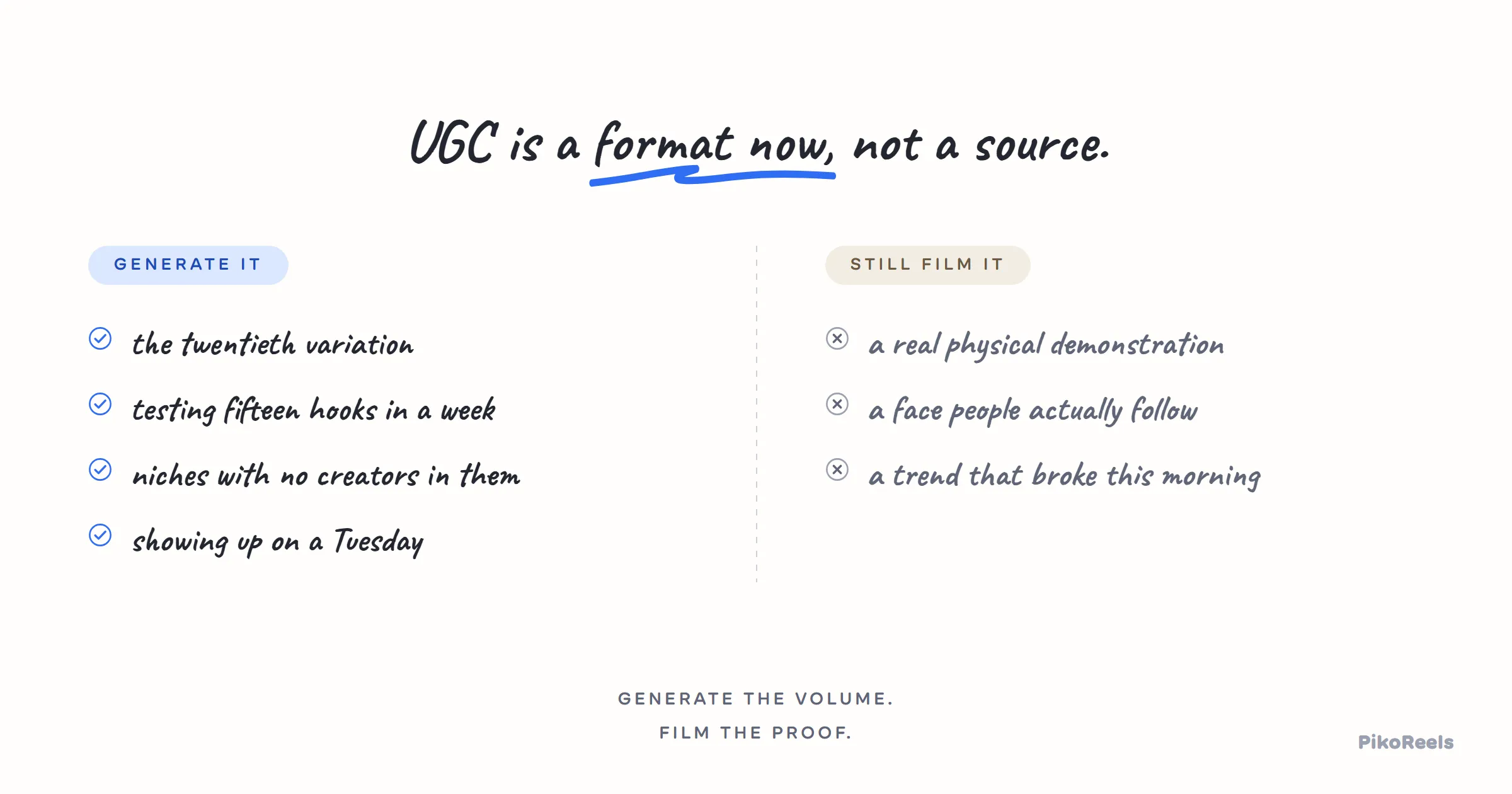
AI UGC or a filmed creator: which one do you actually need?
Where a filmed creator still beats generated video, where generation wins on speed and volume, and how to decide between the two for a short-form campaign without guessing.
5 minute read
Playbook
How to write hooks that keep people past three seconds
Short-form video is won or lost in the first three seconds. What a hook actually is, six shapes that keep working, and how to test them with retention instead of taste.
6 minute read
Pricing
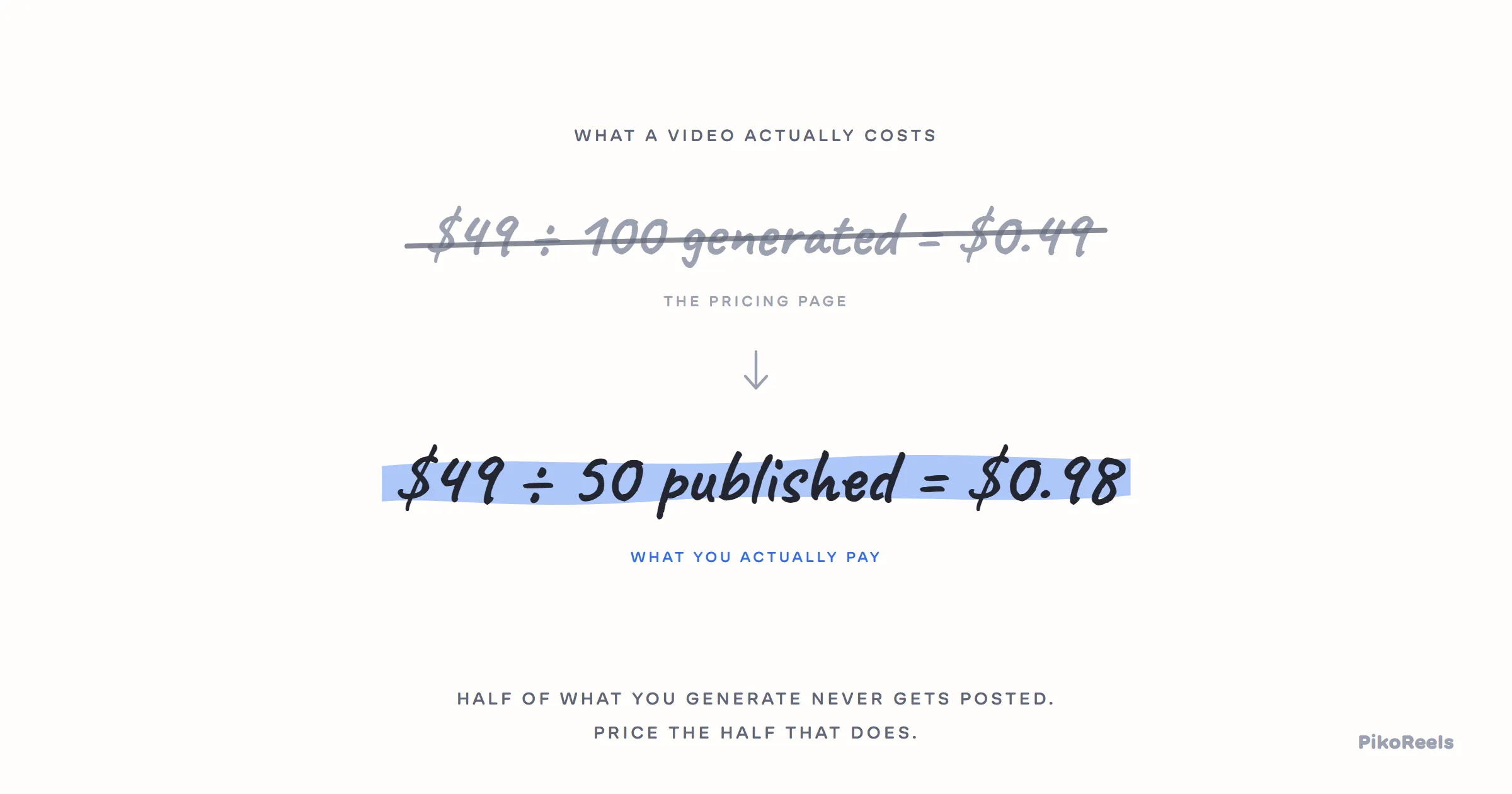
What AI UGC actually costs
AI UGC tools meter three different ways: per video, per credit, or per reel. What each model hides, how to compare them honestly, and what PikoReels charges from $19 a month.
7 minute read

Playbook
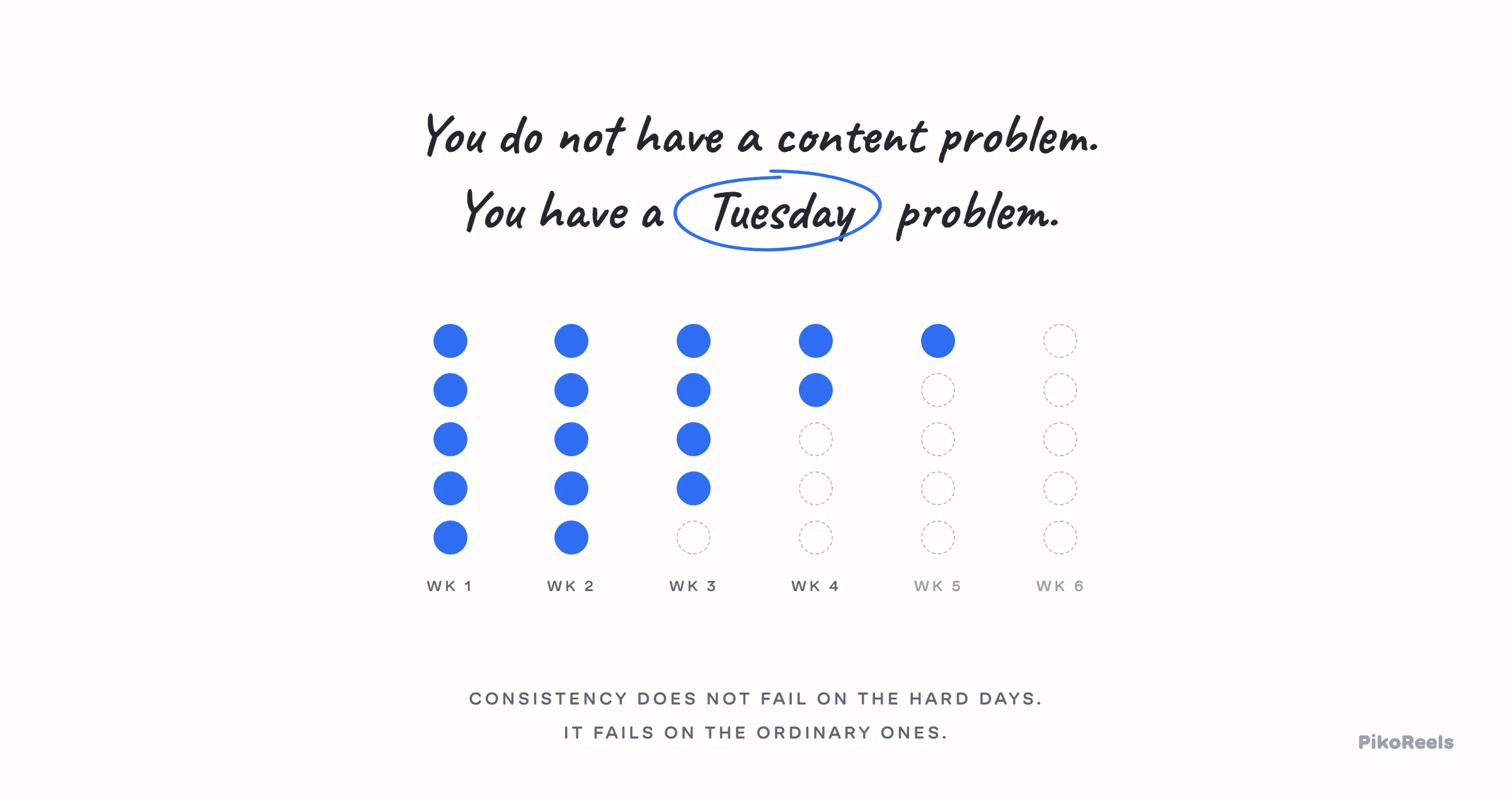
How often should you post short-form video?
Three to five times a week is the honest starting point on TikTok, Reels and Shorts. Why the platforms need volume before they work, and how to hold a cadence without burning out.
5 minute read
Find the thread you need
From the first definition to platform rules and a posting system you can keep, the archive is organized around the questions that come up while making short-form video.
- AI UGCWhat AI UGC is, how the format differs from a filmed creator video, and what it takes to make the generated version actually perform in a short-form feed.
- What it costsHow AI video tools meter and bill: per video, per credit or per seat. What each model hides, and the questions worth asking before you commit to one.
- Platform rulesLabelling, disclosure and provenance on TikTok, Instagram and YouTube. What each platform requires of AI-generated content, dated, because these rules move.
- Posting strategyHow often to post, why volume comes before polish on short-form platforms, and how to hold a publishing cadence that survives a bad week.
- Short-form videoThe mechanics of TikTok, Reels and Shorts: hooks, retention, creative testing, and what the distribution systems reward when they decide who sees a video.
The playbook for your niche
The posts carry the general advice. These pages carry the specific version: the formats that fit one niche, the objections its buyers actually have, and the claims to keep out of the script.
When an article is too slow
Jump to the product-site references for a definition, a calculator, or a direct competitor comparison.
- GlossaryPlain definitions for the vocabulary these posts use: UGC creator, UGC, hook rate, hook and the rest.13 terms
- Free toolsCalculators and generators that need no account: hook rate, UGC cost, safe zones, captions, hashtags and posting times.18 tools
- ComparisonsPikoReels against the other tools in this category, written from each rival's own published pricing and dated.5 comparisons
The short answers
The questions this blog exists to answer, in three sentences each. When three sentences are not enough, every answer hands you the post that is.
What is AI UGC?
AI UGC is creator-style short-form video that was generated rather than filmed: the same handheld, talking-to-camera format that works on TikTok and Reels, except the creator, the footage and the voice come from a model. The format is the point; the tooling is just how it gets made.
Is AI-generated content allowed on TikTok, Instagram and YouTube?
Yes, on all three. What every platform requires is that realistic synthetic content be labelled, and since 2025 the platforms increasingly detect it from provenance metadata in the file rather than waiting for you to disclose. The labels cost nothing; hiding from them costs accounts.
How often should you post short-form video?
Three to five times a week is the honest starting point. The platforms need volume before their distribution can learn who your content is for, and a cadence you keep for three months beats a daily one you abandon after nine days.
What does an AI UGC tool cost?
It depends on how the tool meters: per video, per credit or per seat, and sticker prices are not comparable until you know which one you are looking at. The number that decides whether a tool is cheap is the cost per published video, not the monthly fee.
Is AI UGC better than hiring UGC creators?
They do different jobs. A filmed creator still wins where testimony, physical demonstration or their own audience is the point; generation wins on speed, volume and cost per attempt. The split that works is testing angles with generated video, then giving the proven one to a creator.
How do you write a hook for short-form video?
Make one specific promise inside the first three seconds, on all three channels at once: the first frame, the first spoken line and the text on screen. Then test variants by retention rather than taste, because nobody reasons their way to the right opener.
Reading about it is the slow way
Ten free videos, no watermark, and no card to start.