
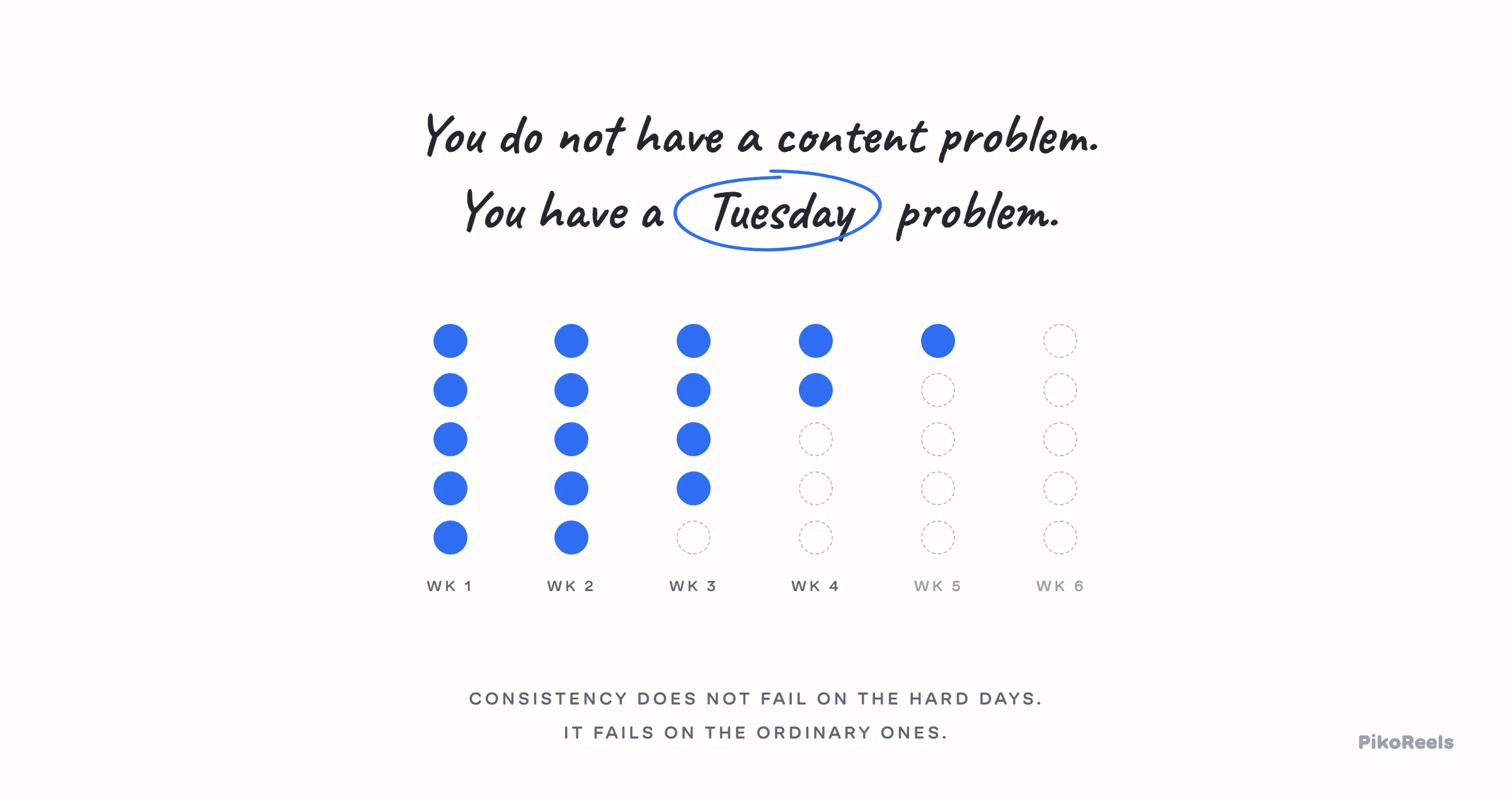
The reason most brands post nothing is not a shortage of ideas. It is the blank month: thirty empty days, each one privately asking what today’s video should be, until the question itself becomes the reason nothing ships. How often to post makes the case for cadence; this post is the other half, a month you can plan in one sitting so that no individual day ever has to be decided.
The plan below assumes you are starting from zero: no audience, no back catalogue, no evidence about what your viewers respond to. That last part matters, because the first month’s real product is not reach. It is evidence.
Decide three things before day one
- The cadence. Three posts a week. Not seven; a cadence you keep for three months beats one you abandon in nine days, and twelve posts is enough to learn from. You can raise it later, when the current pace feels boring rather than heavy.
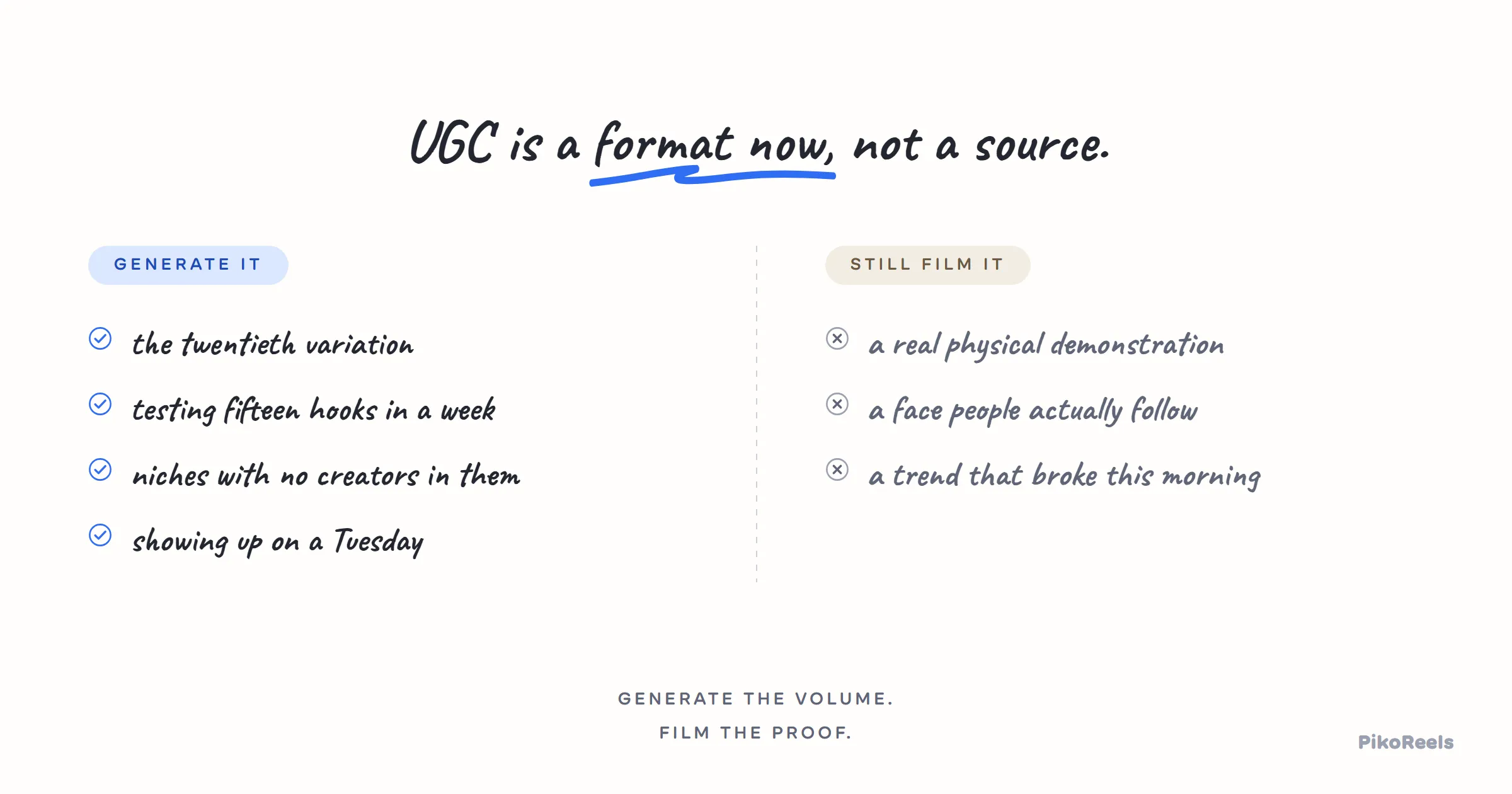
- The formats. Pick three shapes with a track record instead of inventing one per day: an unboxing, an objection answered to camera, a three-things list. A template library with performance receipts is the shortcut here.
- The metric. One number, decided in advance: how many viewers survive the first three seconds. The hook rate calculator computes it from any platform’s stats. Deciding the metric now is what stops week four from becoming an argument about feelings.
Also decide the boring logistics once: every video is one 9:16 cut published to all three channels, TikTok, Instagram Reels and YouTube Shorts, at a consistent time chosen with something like the posting time planner rather than by vibe.
Weeks one and two: baseline, then vary the hooks
Week one is the baseline. Post your three formats, played straight, no cleverness. The goal is not a hit; it is a reference point, three honest data points about how your safest material performs from a standing start.
Week two, keep the formats identical and change only the openers. Same videos in spirit, different first three seconds, using the shapes from how to write hooks. Because only the hook moved, whatever changes in retention is the hook’s doing. This is the cheapest clean experiment in marketing, and almost nobody runs it.
Weeks three and four: follow the signal
By week three you have six posts of data, which is thin but not nothing. Double down on the format that held attention best, retire the one that lost viewers fastest, and use the freed slot to try one new shape. Week four repeats the winners with small variations: a different objection, a different product angle, a different first line. You are not looking for a viral outcome. You are narrowing.
Twelve posts is the smallest month that can teach you something. Zero is the month most plans actually produce.
Resist the mid-month rewrite. A plan changed in week two on the strength of one disappointing video is not a strategy, it is a mood. The month is the unit of decision; the days are just execution.
Reading the month
At day thirty, look at exactly three things. Retention past the first three seconds, per post, which tells you which hooks earned an audition. Rewatches and saves, which tell you which videos someone valued enough to keep. And whether the posts that performed have anything in common: a format, a subject, a first line. Follower count is not on the list; it is the slowest, least actionable number on the dashboard, and week four is far too early for it to mean anything.
The output of the reading is next month’s plan: the two formats that survived, the hook shapes that held, at the same cadence or one notch higher.
Build it in one sitting
Everything above collapses without the logistical trick that makes it survivable: make the month before the month starts. Batch the creation, generate the variants in one session, review the queue once, and schedule the lot so each post publishes itself. When the plan is already made and already queued, a week that goes sideways costs you nothing; the videos go out anyway, and the evidence keeps accumulating while you deal with whatever the week brought.
That is the entire plan. Not inspiration, not a content calendar with forty categories. Three decisions, twelve posts, one reading, repeated.